
April 10, 2007
Providing Context
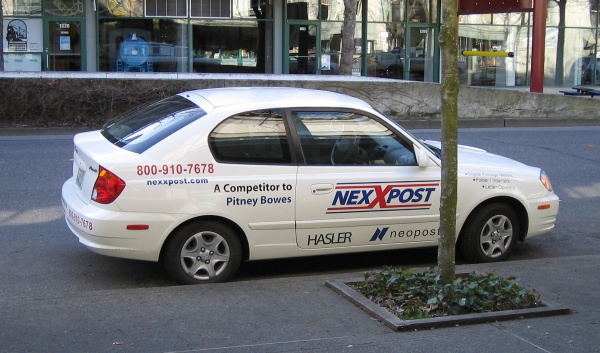 I just saw this car outside my office window. I hadn't heard of Nexxpost before, but now I know what they do: what Pitney Bowes does.
Posted by Bob Pritchett at 10:16 AM | TrackBack
July 8, 2006
Microsoft's Mouth Feel
 Microsoft’s XML Paper Specification is going to take on Adobe’s Portable Document Format. It’s bad enough that Adobe has a 20 year lead and 100% market share; Microsoft chose inferior mouth feel, too.
“Just send me the pee-dee-eff.”
“Just send me the ex-pee-ess.”
I’m no linguist, but I know that it’s easier to say PDF than XPS. Not much, but easier. And “a PDF” sounds more like a thing, i.e. a document, than “an XPS” does.
Technical specs do matter, and XPS looks pretty strong. But in the war for consumer mind share, the battle is won when Sally in Marketing asks Joe in Accounting for a document in your format. Shouldn’t that be as easy as possible?
Microsoft is famous for giving products great code names and then releasing them with committee-created Microsoft Technically Accurate Nomenclature 2006 for Windows.
So it is any surprise that they would take on a technology named “Flash” with one named “Windows Presentation Foundation / Everywhere”? You know, “double-u-pee-eff-slash-ee.”
Are they insane? Try having a long conversation about WPF/E. I can’t even do it. It derails my train of thought. If we do use it around here, I’m sure some easier name will evolve. Like “whip-fee”.
It’s hard enough to get people talking about your product. Don’t let your competitor’s name be easier on the tongue.
Posted by Bob Pritchett at 10:20 AM | TrackBack
June 30, 2006
Corporate partnerships at Legoland
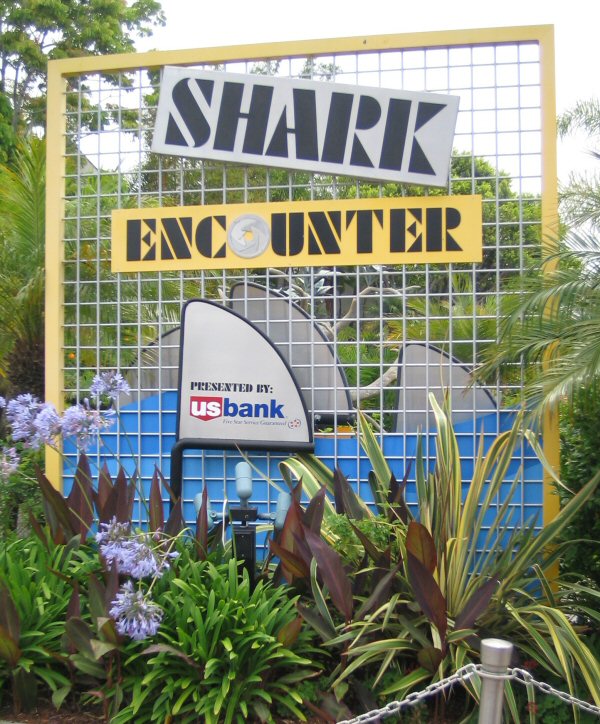
I took the kids to Sea World and Legoland this week and came across some interesting corporate partnerships.
Does it really make sense for a bank to sponsor a shark encounter?
I did like the idea of reserved spots for Volvos...
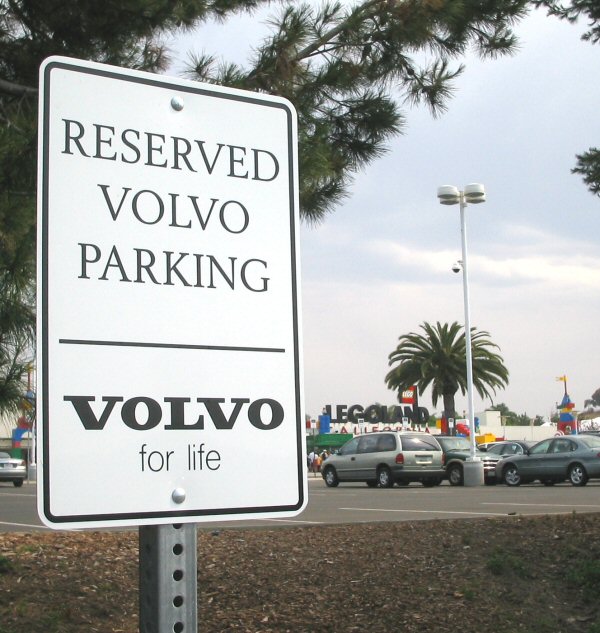
…though I wonder if Legoland actually tows non-Volvos that park there.

Posted by Bob Pritchett at 10:05 AM | TrackBack
April 14, 2006
Authentic advertising, cyborg style
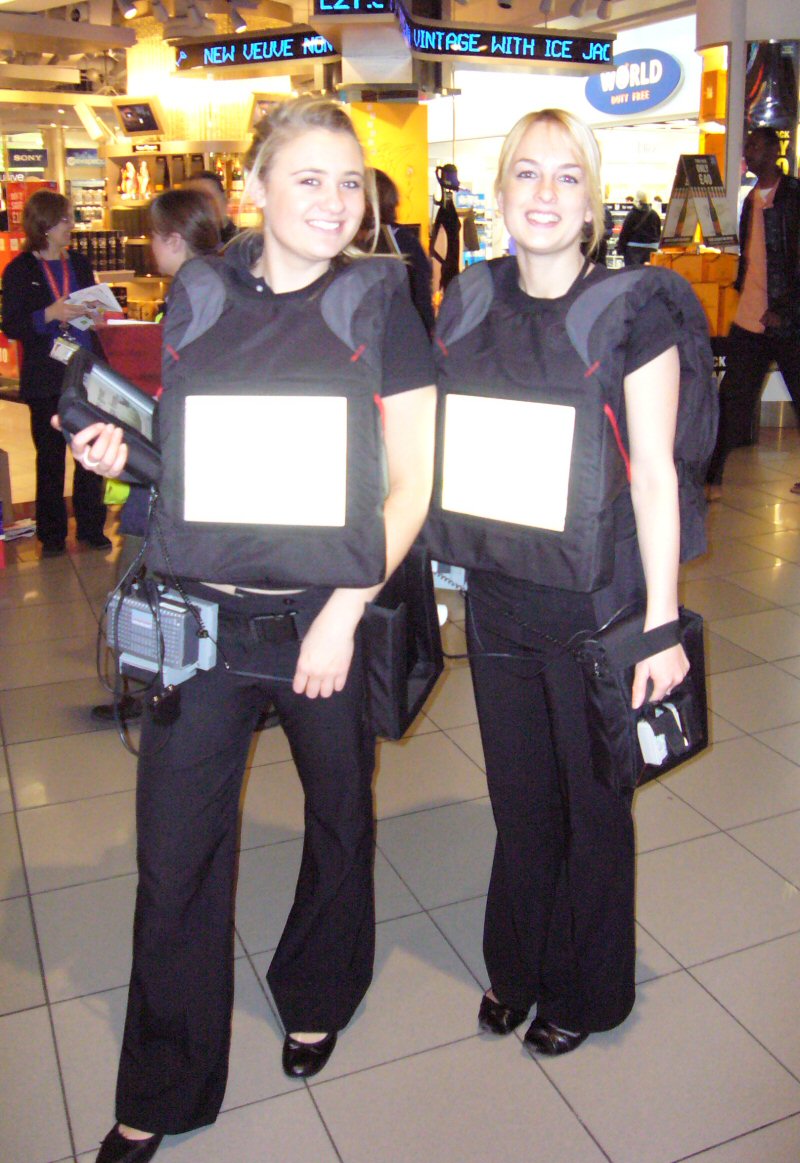 In London’s Heathrow airport the other day I was stopped by these two young ladies doing a teletubbies impression.
I had previously seen the LCD-in-a-shirt employed to promote the King Kong MasterCard in Times Square. For King Kong, the LCD was very well integrated into the shirt, with the extra hardware hidden. On a dark street, with wild clips from the movie playing seemingly straight from the promoter’s belly, it was quite disconcerting.
In airports I am used to more conventional advertising than in Times Square, so these bulky cyborg-linebacker contraptions really stood out. The cheerful salesladies offered a choice of a coupon for whiskey or chocolate. Taking the chocolate coupon (printed-on-demand from the back of a wrist), I asked if the chocolate was any good.
"I don’t know. They haven’t let us try it," one told me.
"Or the whiskey!" added the other.
It reminded me of Seth Godin’s excellent book, All Marketers Are Liars, The Power of Telling Authentic Stories in a Low-Trust World. A pretty girl wearing a video screen is as blatant a “look at me!” advertisement as there is. But it is also a chance to tell a story, because unlike a poster or billboard, your live saleslady can actually talk to your customers. Maybe she should get to try the product.
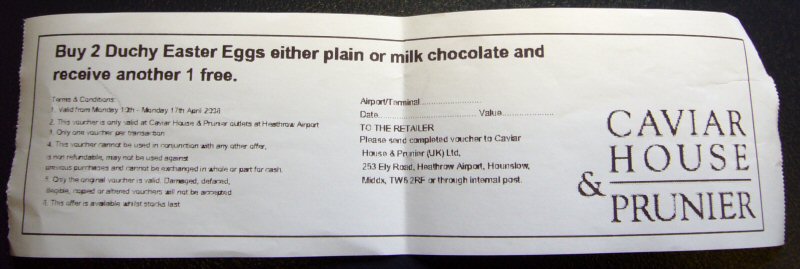
Posted by Bob Pritchett at 5:00 AM | TrackBack
April 3, 2006
Nephew art signs are a tragic waste
A sign should enhance your brand and communicate a positive message about your business. It doesn’t have to be beautiful, but it does need to be appropriate.
I expect magic-marker-on-cardboard signs at the farmer’s market. And I expect well-lit permanent signs on retail businesses. What amazes me is how many businesses invest a lot in high-end sign hardware and nothing in the sign content.
(In fact, "nephew art" is a recognized problem in the professional sign business, and the source of many ethical dilemmas.)
A local bank has 18 branches and an acceptable logo. They did not ask the graphic designer to show them how to use the logo on signage, though. Every time I drive past their large, expensive, backlit, ugly sign, I think to myself that this bank doesn’t know what it is doing. (I was amazed to find out they have 18 branches.)
A local real estate agency spent a fortune on signs I see all over town. It is clear they didn’t spend a penny on what the sign looks like. The “art” is straight out of a word processor.
As a rule of thumb, you are wasting money if you didn’t spend a quarter of the cost of your new sign on the art. (This is why the magic-marker-on-cardboard signs are okay. At the farmer’s market.)
As a rule of life, you are wasting money if you have a sign made with art created in Microsoft Word. Or using the Papyrus font.
- See some really ugly signs.
- And stop using Comic Sans.
Posted by Bob Pritchett at 5:00 AM | TrackBack
January 30, 2006
When no one tracks your industry
Every time I read a business magazine detailing how this company or that won X points of market share from a competitor, or is the preferred choice of Y% of consumers, I wish that there was someone tracking my industry, too.
But small, private businesses are not followed by analysts, and JD Power and Associates is not surveying customer attitudes about me and my competitors.
Every year I conduct a detailed survey of my customers. I get some great feedback on our business, but very little information on how we are doing in respect to our competition. So last year I redesigned the survey to be more generic and invited my competitors to participate. Every business that agreed to email the survey to their customer list got equal access to the survey results. Almost all of my competitors participated.
The anonymous survey covered demographics, sales channels, product usage, and brand perception. I learned which market segments I was strongest and weakest in. I learned how my competitors' customers viewed me. And I got to see, at last, a big picture view of my industry and my place in it.
Before you survey your customers, see if you can survey your whole market instead.
Posted by Bob Pritchett at 4:00 AM | TrackBack
January 16, 2006
Advertising Mexico with a terrarium
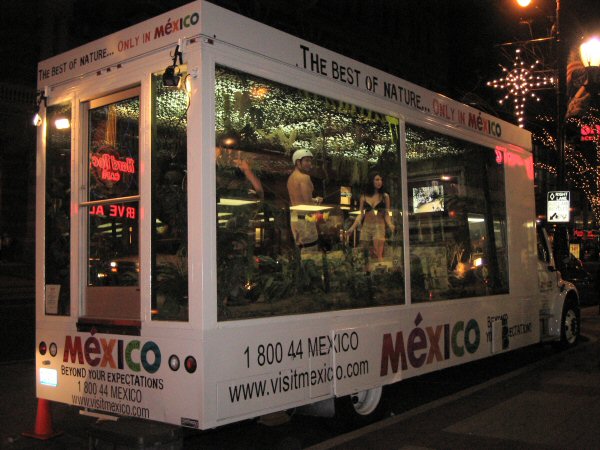 On a cold Philadelphia night I encountered this life-sized terrarium as I hustled from the convention center to my hotel.
Is this kind of advertising worth the cost? I like advertising that can be measured in terms of return on investment. Image advertising has its place, with Coke, Pepsi and other mass producers. It may be impossible to tie this billboard to that moment of liquid refreshment, but ad expenditures can be mapped to market share and sales volume. Coke gets the benefit of Coke’s image ads. Does every Mexican tourist business get the benefit of a general increase in Mexican tourism? Does this kind of non-specific advertising even increase tourism?
Advertising financed by government agencies or government-mandated collectives always make me uncomfortable. Sure, every small tourist business in Mexico can not afford to advertise in Philadelphia. But spreading the cost of that advertising over the whole industry may not return the benefit equally. And without careful tracking of the return on investment, cool and innovative ideas (bikini-clad girls on cold winter streets) push out boring but potentially more effective resource use.
Of course, the campaign is award winning. I just wonder if the award is for cleverness or effectiveness.
Posted by Bob Pritchett at 4:00 AM | TrackBack
January 6, 2006
Low cost restaurant evangelism
I eat out more than I should, and I love it.
Before a trip I research area restaurants in advance. At home I am one of the first to visit every new restaurant in town. And I tell everybody who cares, and quite a few who don’t, about my discoveries. (I even post some reviews at Judy's Book.)
If a restaurant is good I email an endorsement to the whole office. If it is great I ask for a brochure or menu I can leave at our reception desk. And then I ask myself, why am I asking the restaurant how I can help bring it business? Why isn't it asking me?
That's why I was impressed with Sensa, here in Bellingham, where after a great meal I opened the folder with my credit card receipt to find a comment card, a business card, and a small brochure describing their menu and banquet facilities -- all of which I put to use.
Do you put a card or brochure in every box or bag for your customer to share with a friend? Your most enthusiastic customers want to spread the word about your business. Are you providing tools to make it easy for them to share their good experience?
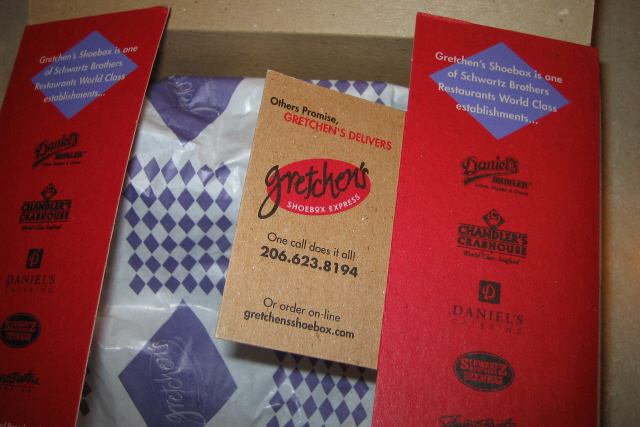
01/07/06 Update: Yesterday I had a boxed lunch from Gretchen's at a meeting and saw this example of integrating a card right into the packaging.
Posted by Bob Pritchett at 6:01 AM | TrackBack
January 5, 2006
Does your business look authentic?
I got a clever marketing approach by email. A vice president at a corporate finance company forwarded a message from one of his market analysts that read:
Bob,
One of our market analysts has brought to my attention that our firm could be a good partner for supporting your growth strategy. Are you available for a brief teleconference this week, or perhaps early next week would be better?
Best regards,
[name]
[signature block]
[forwarded message]
…
The email did not look like spam. The forwarded email from the Market Analyst asked the sender if he had heard back from us. All the details were consistent with what the email said, and full contact information was provided in both signatures -- the forwarded message and the one sent to me.
So I did the first thing I do when anybody I don’t recall sends a follow up email. I checked my email archive and googled the company name.
Six months before the VP had sent me an identically worded email forwarding a very similar email from the same market analyst. Smells like an automated pitch.
The company name, amazingly, brought up only two hits on Google. One was their corporate web site, which described lots of deals they had done but with no client names. Real estate, $2,000,000; Biotech Equity, $7,000,000; plastics ~ debt, $3,000,000. Really? How do I know?
The second was a social networking site where the purported Market Analyst revealed himself to be the company’s "database ubermeister" and an idiot. Okay, that's not fair. Let's say lovable goofball without the sense to keep his employer’s name off a site where he says "haha! I'm smarter than you!" and reveals that he is divorced, a Sagittarius, and looking to meet "somebody like me but with boobs...[cruder stuff, and] fewer tattoos than my mom".
In All Marketers Are Liars (I loved this book!) Seth Godin talks about "the power of telling authentic stories in a low-trust world". When your story is "we are a strong, professional financial partner who can help support your growth strategy" authenticity is important. This firm didn't provide details to back up their story. Worse, they let details that detracted from the story rise to the top of the list.
Do you look authentic on the web? What do you do when checking out a cold caller? Have you checked out your own business the way the next person to hear your marketing pitch will?
(Thanks to Business Pundit, whose post on spying on your employees through social networking sites brought this back to mind. For what it's worth, I think you should always know what hits your company name is bringing up. You can’t stop employees from having personal lives and web sites, but you can know and care if those sites reference your business or represent 50% of your corporate web presence.)
Posted by Bob Pritchett at 6:08 AM | TrackBack
December 28, 2005
Grow your brand one step at a time
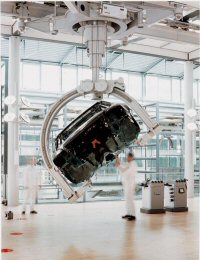 This photo tour of the Volkswagen Phaeton plant is really impressive.
Equally impressive is how dead-on right the prediction of, um, everybody, was that putting out a $70,000 - $100,000 car with a Volkswagen badge would fail.
Branding counts. By many accounts the Phaeton is a great car. I wouldn’t mind driving one myself. But it was just too far outside the Volkswagen brand, and in November Volkswagen admitted it.
Brands like Honda, Audi, and others have successfully moved upscale, but one step at a time. It is hard to do it in a single leap.